A Tradition as Old as Human Expression
Wall painting is anything but a modern invention. Long before cities, governments, or spray cans existed, early humans covered cave walls with images that communicated what words alone could not. That fundamental impulse — to mark a surface, to make a statement, to be seen — is the same force driving protest graffiti today. It is, as some historians argue, a tradition with roots stretching back to Pompeii and beyond.
Over millennia, the craft evolved dramatically. Colors grew bolder, styles more complex, techniques more refined. But the core motivation has barely changed. People still reach for a can or a brush when they need to say something the world isn't ready to hear through official channels.
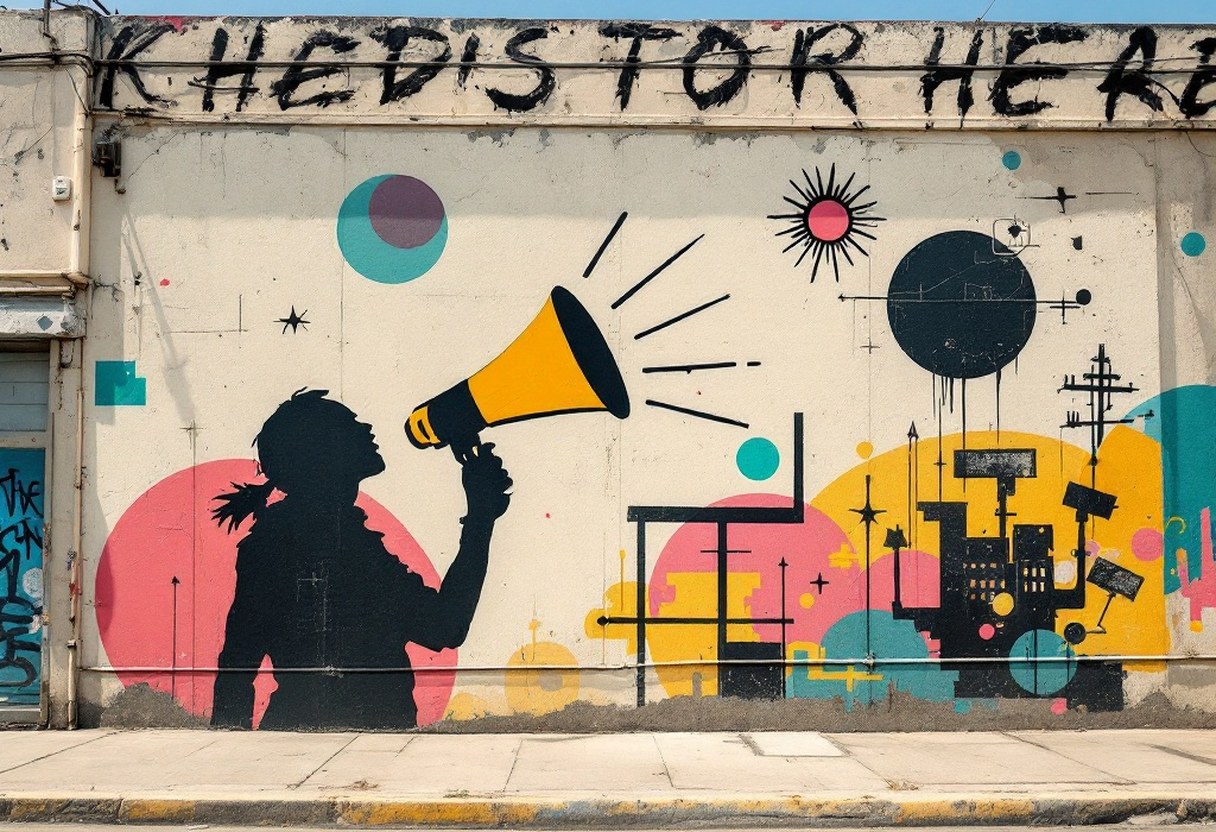
Why Governments Have Always Inspired Graffiti
With the rise of civilization came governments — and with governments came controversy. From colonial occupation to modern democratic corruption, no administration in history has been beyond critique. The promise of government "of the people, by the people, for the people" has always collided with the realities of tyranny, inequality, and abuse of power.
When conventional protest is suppressed, dangerous, or simply insufficient, graffiti fills the gap. Ordinary citizens rarely have the numbers or resources to dismantle a governing body directly. But a striking image on a prominent wall can shift public consciousness, spark conversation, and remind people they are not alone in what they feel. Artists like Banksy have built entire careers on exactly this tension between power and the public.
"Let the mass know what you feel — what they feel in their hearts but fail to give a voice. The satisfaction will surpass all."
The Unlikely Galleries of Urban Protest Art
In many countries — including China and the United States — painting government buildings or heritage structures is explicitly prohibited. Artists who ignore those boundaries risk serious legal consequences. But the city is vast, and so is the canvas.
The most powerful protest graffiti tends to appear in subways, back alleys, derelict vehicles, and shuttered storefronts — spaces where authority's grip loosens and audiences are organic and everyday. These are the galleries of the street: no admission, no gatekeepers, no curator deciding whose voice matters. Anyone who wants to understand what makes protest graffiti genuinely move people quickly learns that placement is as deliberate as the image itself.
Street art thrives in the spaces authority forgets to watch — subways, alleyways, shuttered shops. These overlooked surfaces become the most honest public forums a city has.
Inspirations for street art can come from anywhere — a newspaper headline, a lived injustice, a moment of collective anger. The wall is simply the medium. The message is everything. When you can't march, when your voice is drowned out, when the powerful seem unreachable — the wall remains. That message travels further than most people expect: from New York's legendary subway cars to cities across every continent, the language of protest on walls has proven impossible to silence.
Featured figures
Banksy
Graffiti artist, political activist and painter
Banksy is a pseudonymous England-based street artist, political activist, and film director.