Site-Responsive Street Art That Recruits Its Surroundings
The most inventive graffiti doesn't fight its environment — it conscripts it. The best site-responsive pieces treat walls, hardware, and even nearby trees as collaborative materials, producing moments that reward a second glance and a third. Three pieces from Toronto, Birmingham, and France show exactly how this works — and they sit comfortably alongside the remarkable range of street art at every scale, from skyscraper murals to pavement-level gems.
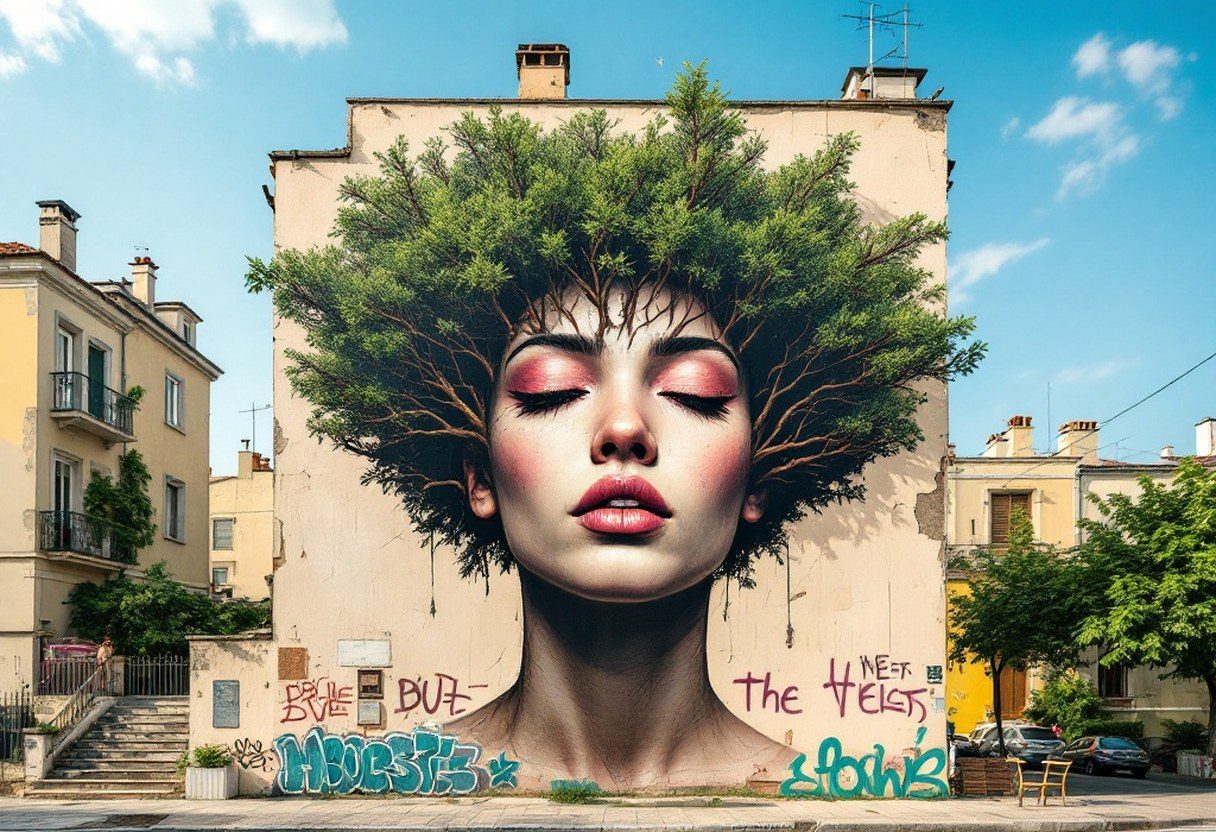
Toronto: Real Trees as a Figure's Hair
This Toronto mural is a masterclass in site-specific creativity. At first glance it reads as a straightforward face painted on a wall — but look closer and the concept clicks brilliantly into place. The artist incorporated actual trees growing nearby, letting their canopies serve as the figure's hair. It's the kind of simple-yet-genius idea that makes you wonder why nobody thought of it sooner — a quality shared by the work of Zacharevic and Peeta, artists equally skilled at making the impossible feel inevitable.
The best street art rewards a second look — and this Toronto mural earns a third.
Birmingham: Satellite Dishes Transformed into a Cosmic Telescope
This Birmingham piece is a perfect example of an artist reading an environment and responding to it. Spotting a cluster of satellite dishes already fixed to a wall, the painter built a composition around them — constructing a massive telescope beneath the dishes and placing a tiny human figure at its controls. The result gives the impression that the dishes are part of the telescope's array, converting overlooked urban hardware into something epic and exploratory. Pure observational wit, executed with confidence.
France: A Bruce Lee Mural That Bends a Real Metal Rod
Painted somewhere in France, this tribute to Bruce Lee is as kinetic as the man himself. The artist depicted Lee mid-action, posed in a way that makes it appear he has physically bent a real metal rod fixed to the wall. The interaction between the painted figure and the actual architectural element is seamless, and the energy leaping off the surface is unmistakable. It's a bold, inventive portrait that goes well beyond a standard tribute — it channels Lee's legendary force into the very fabric of the wall.
What These Three Pieces Share
Each of these works succeeds because the artist arrived with sharp observational instincts rather than a predetermined design. The environment itself became part of the idea — trees became hair, satellite dishes became telescope arrays, a metal rod became proof of superhuman strength. That responsiveness is what separates memorable street art from paint on a surface, and it echoes the underlying principles that distinguish the many styles within graffiti culture — each demanding its own form of creative reading.
- Face of the City — Toronto: real trees as a painted figure's hair
- Satellite Dishes — Birmingham: urban hardware transformed into a cosmic telescope
- Bruce Lee — France: a kinetic tribute that physically bends reality
Featured figures
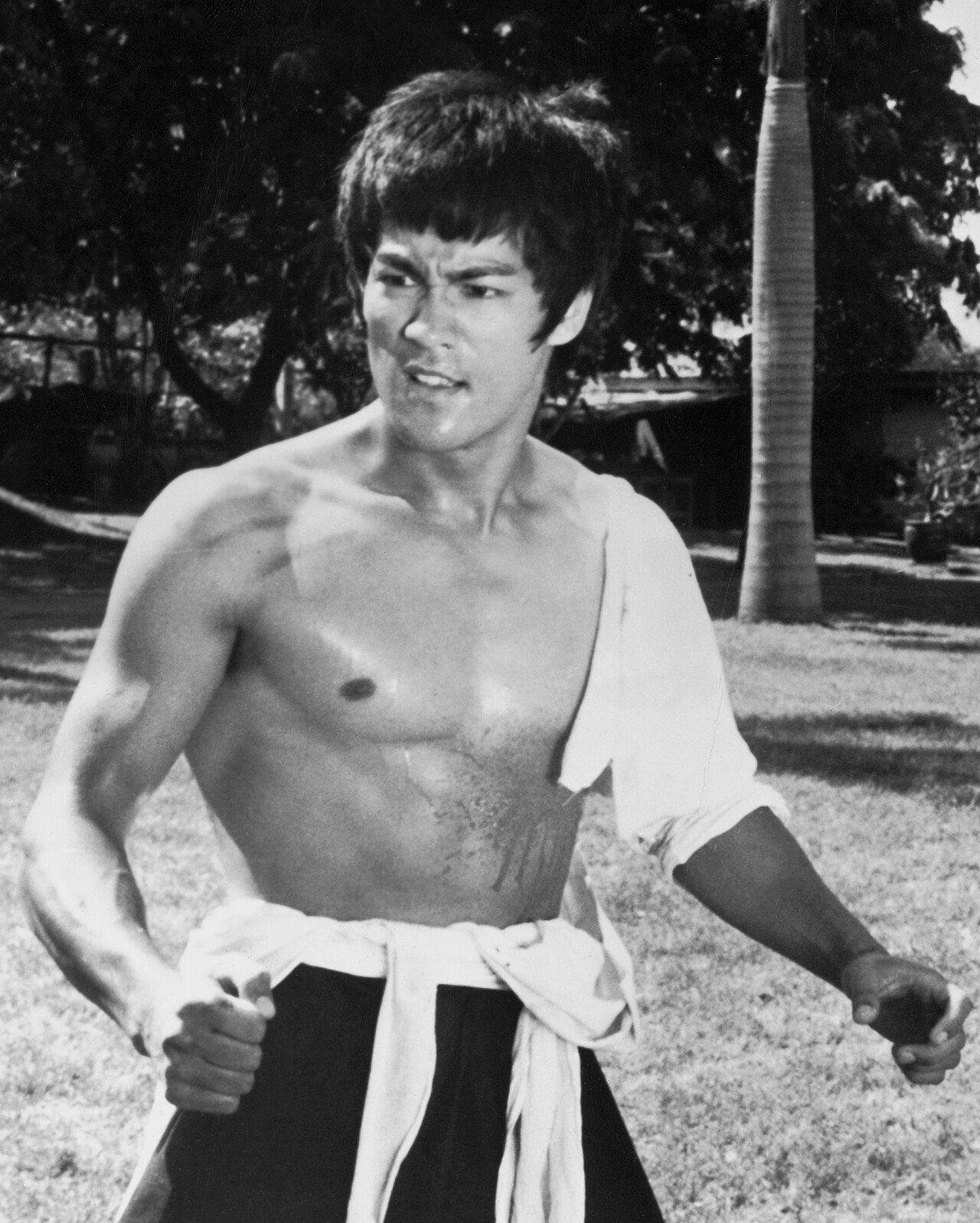
Bruce Lee
Martial artist and actor (1940–1973)
Bruce Lee was a Hong Kong and American martial artist, actor, and filmmaker.
Website ↗Instagram ↗X ↗Facebook ↗
Photo: Public domain · National General Pictures (Wikimedia Commons)