One Name, Many Forms
Graffiti is not one thing. It is a family of related styles and techniques, each with its own history, skill demands, and cultural weight. Understanding the distinctions between them is essential to appreciating the form — and to understanding why writers within the culture hold certain work in far higher esteem than others. That diversity of expression is part of what makes graffiti's global reach so remarkable — the same core vocabulary of styles surfaces from São Paulo to Seoul, each scene inflecting the forms in its own way.
The Core Styles
The Tag: Graffiti's Most Basic Form
The most fundamental unit of graffiti — the writer's name or alias rendered quickly in a single color. Writing over another writer's tag is a serious breach of etiquette within graffiti culture. The tag was central to New York's golden era, when writers competed to place their names on as many surfaces — and in as many boroughs — as possible.
The Throw-Up: Speed and Scale
A step up from a tag in complexity and scale. Throw-ups use two or more colors and bubble-style lettering. They are faster to execute than a full piece but demand more commitment than a tag.
The Piece: Full Compositions
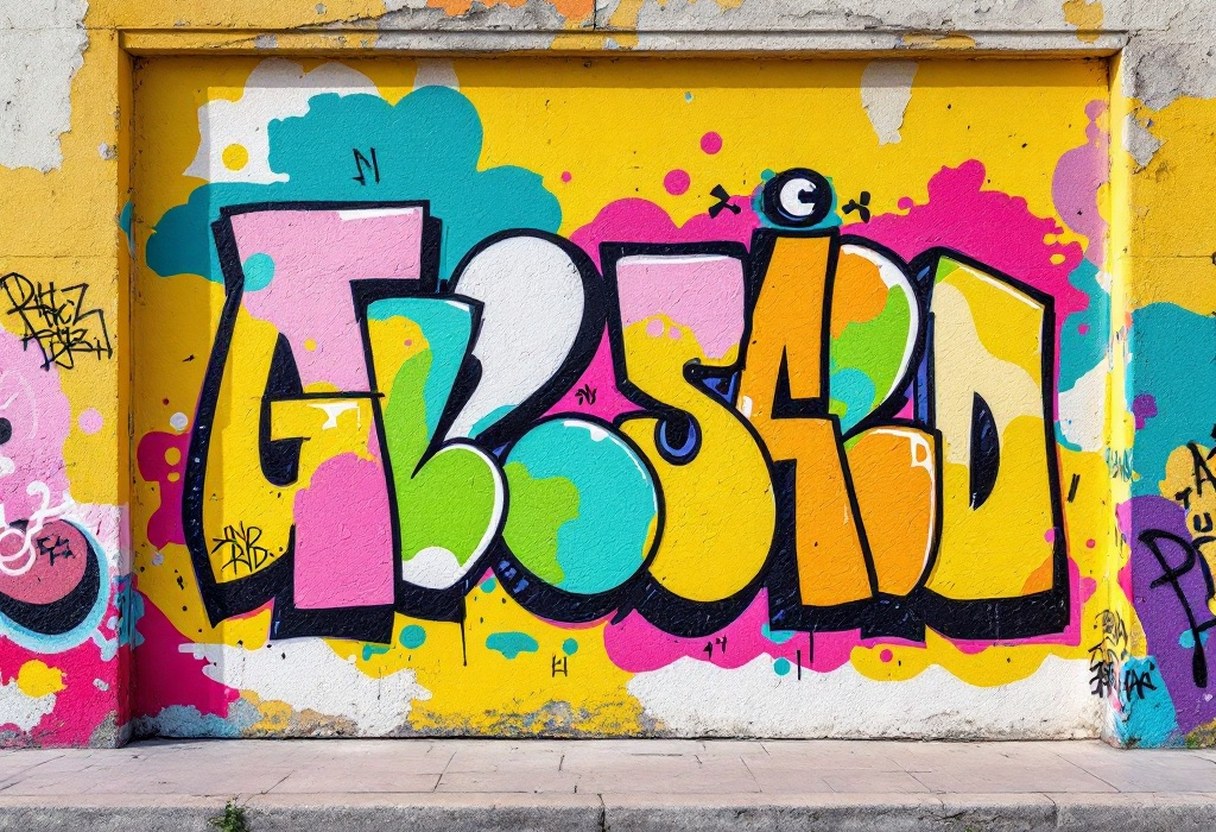
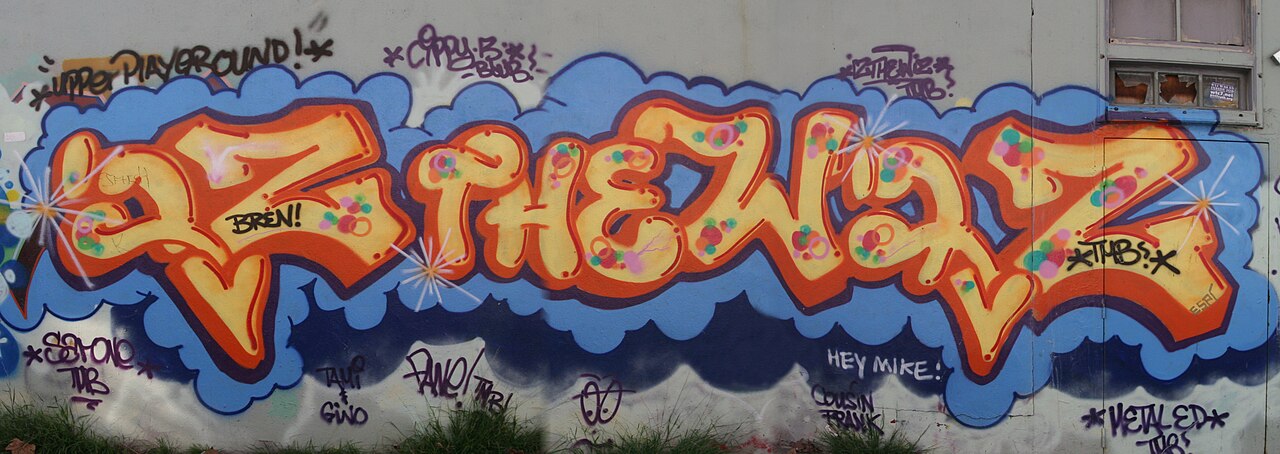
Short for masterpiece — a fully rendered, freehand composition typically using three or more colors. A piece demands serious skill and significant time to complete. Writers like Iz the Wiz built legendary reputations on the quality and sheer volume of their pieces across New York's subway system.
The Blockbuster: Maximum Coverage
Large-scale lettering designed to cover maximum wall space using bold, blocky characters. Blockbusters can be applied with rollers as well as spray cans, making them among the most physically expansive works in the graffiti repertoire.
The Stencil: Precision and Repeatability
A pre-cut template used to reproduce detailed imagery quickly and consistently. Stencils enable fine detail without requiring freehand skill, and their repeatability makes them a favorite tool for politically driven work — a tradition that stretches from Cold War Berlin to Banksy's walls in the West Bank.
The Sticker: Portable Presence
A tag or image applied to a postage label or pre-printed sticker. Portable and fast to deploy, stickers function as a compact extension of a writer's presence across a city.
Heaven Spot
A piece placed in a dangerously difficult-to-reach location — a rooftop ledge, bridge support, or highway overpass. The difficulty is the statement. Within graffiti communities, a well-placed heaven spot earns a writer a level of respect that no technically polished work on an easy wall can match. The risk is genuine, and that is precisely the point — a logic that connects to the broader graffiti principle that concept, courage, and context can outweigh technical finish.
Within graffiti culture, placement and risk can matter as much as technical execution. A heaven spot in a near-impossible location commands respect that a polished piece on an accessible wall simply cannot earn.
Featured figures
IZ the Wiz
American painter
Michael "IZ the Wiz" Martin was one of the most prominent graffiti writers of the New York graffiti movement of the late 1970s and early 1980s.
Photo: CC BY-SA 2.0 · Ale X (Wikimedia Commons)