Where Graffiti Began
The word graffiti traces back to the Italian graffiato, meaning "scratched" — a nod to the sharp objects ancient peoples used to carve marks into surfaces. That etymology alone tells you something: this is an art form with deep human roots, not some fleeting urban fad.
Cornbread, a high school student from Philadelphia, is widely credited as the first modern graffiti writer. Around 1967, he began tagging city walls — originally just to get the attention of a girl. What started as a crush became a cultural movement.
It wasn't until the 1980s that galleries began taking graffiti seriously as a legitimate art form. Even then, the line between celebrated public art and illegal vandalism came down to a single factor: permission. That tension still defines graffiti culture today, and it extends to newer, nondestructive forms of the practice — video projection, chalk work, and street installation — where the legal boundaries get genuinely complicated.
NYC's Subway Era: Graffiti's Golden Age
New York during those decades was a different world entirely. The streets, the fashion, the lifestyle — and yes, every available surface — looked nothing like the city does today. Subways, tunnels, building walls: graffiti was everywhere, and it was impossible to ignore.
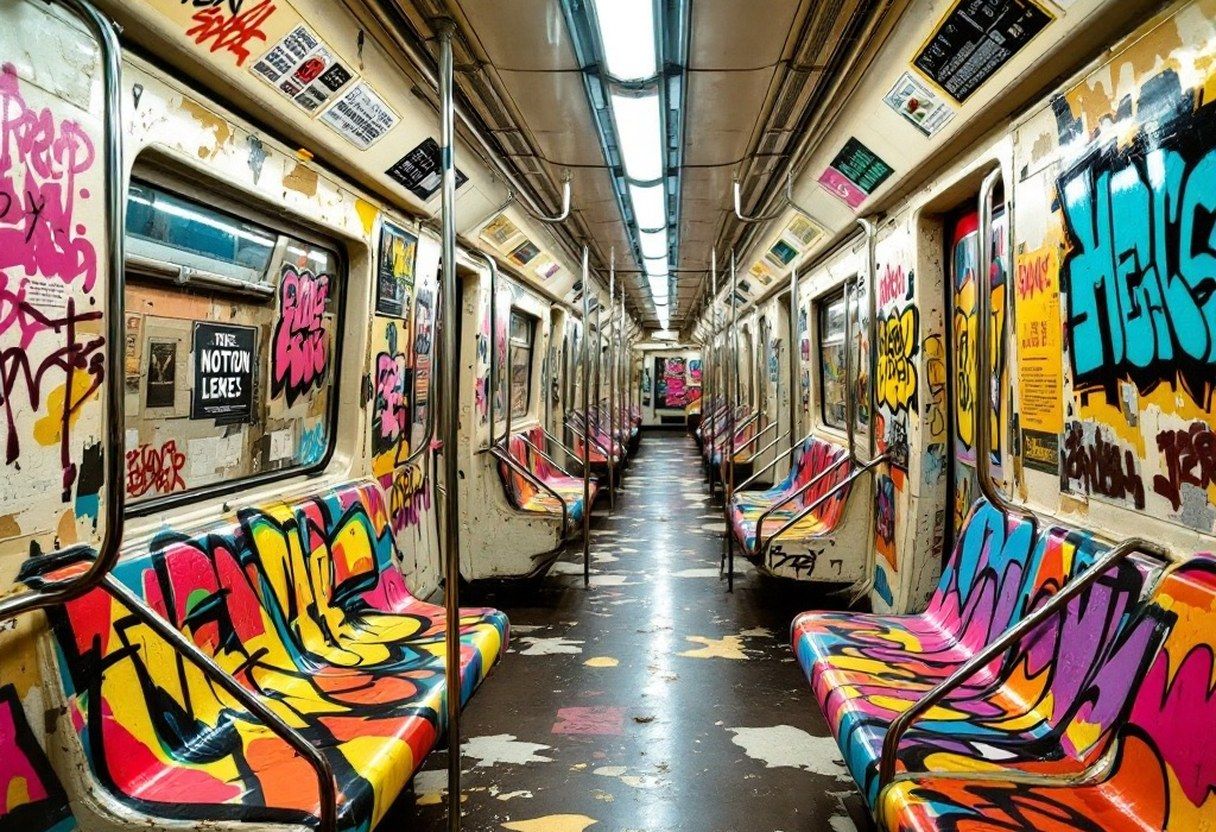
Legendary writers like Dondi, Lady Pink, Zephyr, and Revolt tagged streets and tunnels with an energy that was raw, prolific, and completely unapologetic. The 1983 film Wild Style remains one of the best windows into what that era actually looked and felt like — essential viewing for anyone serious about graffiti history.
Most people walked past the work without a second glance. Martha Cooper, staff photographer for the New York Post, stopped and looked harder than anyone.
Cooper's fascination with the art form drove her to document it obsessively at a time when the mainstream world hadn't caught up. Her instinct to preserve what others dismissed has proven invaluable — much like the ongoing efforts to preserve New York's graffiti beneath the streets before it disappears entirely.
See also A Field Guide to Graffiti Styles: From Tags to Heaven Spots — a breakdown of the visual vocabulary that defined this era.
Key Moments in Early Graffiti History
- 1967: Cornbread begins tagging Philadelphia — the birth of modern graffiti writing
- 1970s–early '80s: NYC subway system becomes the global epicenter of graffiti culture
- 1983: Wild Style film documents the NYC scene for posterity
- 1984: The Clean Train Movement launches; tagged subway cars are cleaned, replaced, or retired
- Late 1980s: Anti-graffiti legislation tightens; the underground era effectively ends
The Clean Train Movement, launched in 1985, was a direct assault on the culture: every graffiti-covered car was cleaned, replaced, or taken out of service until the subway system was effectively clear. It worked, at least on the trains — but it couldn't erase the history that had already been made.
Featured figures
Cornbread
American bread made with cornmeal
Cornbread is a Philadelphia graffiti writer who began tagging his name around the city in the late 1960s and is widely regarded as one of the first modern graffiti writers.
Photo: CC BY-SA 3.0 · Zankopedia (Wikimedia Commons)
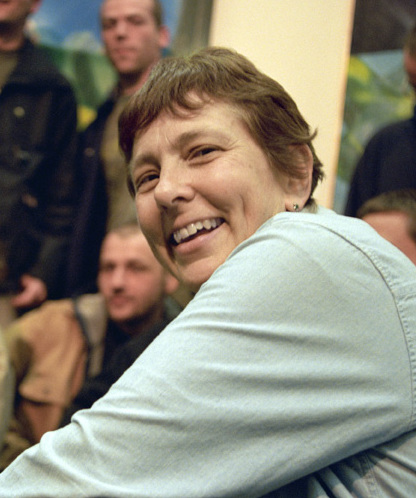
Martha Cooper
American photojournalist
Martha Cooper is an American photojournalist.
Photo: CC BY-SA 3.0 · Mikamote (Wikimedia Commons)